architecturalcConcept
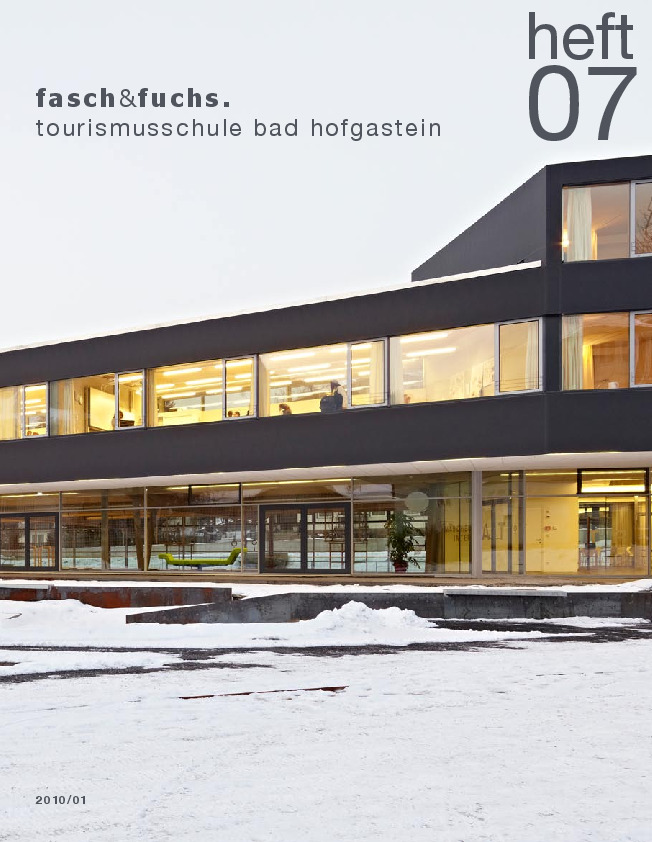
the existing tourism school is being expanded to include a gymnasium, various classrooms and training rooms, and a girls’ dormitory. two different architectural languages — the existing building and the new extension — are positioned as equally important. minimal interventions in the existing structure allow the two building volumes to interlock harmoniously.
outdoor space
the compact building structure and the relocation of parking areas make it possible to create a generous open space to the south. the school forecourt is no longer occupied by cars.
foyer
the foyer on the ground floor serves as the central reception area, connecting the school, both dormitories, and the gymnasium. its spatial generosity results from its connection to the gym and the visual links to the exterior. during events, the seminar/multipurpose room, the vinotheque, and the serving room can be opened up and used together with the foyer — and, if needed, also with the gymnasium.
the existing tourism school is being expanded to include a gymnasium, various classrooms and training rooms, and a girls’ dormitory. two different architectural languages — the existing building and the new extension — are positioned as equally important. minimal interventions in the existing structure allow the two building volumes to interlock harmoniously.
outdoor space
the compact building structure and the relocation of parking areas make it possible to create a generous open space to the south. the school forecourt is no longer occupied by cars.
foyer
the foyer on the ground floor serves as the central reception area, connecting the school, both dormitories, and the gymnasium. its spatial generosity results from its connection to the gym and the visual links to the exterior. during events, the seminar/multipurpose room, the vinotheque, and the serving room can be opened up and used together with the foyer — and, if needed, also with the gymnasium.
gymnasium
the gymnasium is set below ground level and receives glare-free light from the north.
on the ground floor, a spectator stand is positioned in front of the hall, allowing views inside both during events and everyday school activities.
the changing rooms are preceded by a separate clean access corridor connected to the equipment room, making external use possible.
classrooms
five classrooms are located in the connecting wing between the existing school / boys’ dormitory and the girls’ dormitory. one classroom has been exchanged with the seminar/multipurpose room, which has been relocated to the ground floor. the roofs of the gymnasium and foyer provide spacious outdoor break areas.
girls’ dormitory
the girls’ dormitory is connected to the school on the ground floor and first floor.
the building is positioned so that during the summer, a hotel or seminar operation can function independently from the school. each pair of rooms has a niche-like space in front, which opens into large, light-filled zones. the corridor areas are transformed into spaces for communication and social interaction.
additionally, separate common rooms are provided on each floor, with attention paid to visual connections to the dormitory activities.
ski, bicycle, and drying rooms are located on the ground floor, ensuring short internal routes.
the study room opens generously to the outdoor space; in summer, the covered outdoor area in front can also be used.
the gymnasium is set below ground level and receives glare-free light from the north.
on the ground floor, a spectator stand is positioned in front of the hall, allowing views inside both during events and everyday school activities.
the changing rooms are preceded by a separate clean access corridor connected to the equipment room, making external use possible.
classrooms
five classrooms are located in the connecting wing between the existing school / boys’ dormitory and the girls’ dormitory. one classroom has been exchanged with the seminar/multipurpose room, which has been relocated to the ground floor. the roofs of the gymnasium and foyer provide spacious outdoor break areas.
girls’ dormitory
the girls’ dormitory is connected to the school on the ground floor and first floor.
the building is positioned so that during the summer, a hotel or seminar operation can function independently from the school. each pair of rooms has a niche-like space in front, which opens into large, light-filled zones. the corridor areas are transformed into spaces for communication and social interaction.
additionally, separate common rooms are provided on each floor, with attention paid to visual connections to the dormitory activities.
ski, bicycle, and drying rooms are located on the ground floor, ensuring short internal routes.
the study room opens generously to the outdoor space; in summer, the covered outdoor area in front can also be used.
- location:
- dr.zimmermann straße 16, 5630 bad hofgastein, austria
- client:
- wirtschaftskammer salzburg
- architecture:
- fasch&fuchs.architekt:innen
- team architecture:
- regina gschwendtner, jürgen hierl, martin ornetzeder, carola stabauer, heike weichselbaumer
- project management:
- thomas ausweger
- structural engineering:
- ingenieurbüro wimmer&partner
- building physics:
- arge lukas/graml
- building services engineering:
- tb di axel burggraf gmbh
- electrical systems:
- ets elektrotechnik salzmann
- fire safety:
- tb ing wilfried hofmann
- landscape planning:
- idealice landschaftsarchitektur zt
- photography:
- margherita spiluttini , michael sprachmann
- competition:
- 2007
- planning:
- 2007 - 2009
- execution:
- 2008 - 2010
- gross floor area:
- 4.805m²
- building costs:
- 8,4 mio. euro
awards
2010 building-owner award
2010 architecture award, state of salzburg
2014 state prize for architecture, nomination (austria)
see competition